Thursday, February 21, 2013

Thursday of the ist week in Lent


From a homily by Saint Asterius of Amasea, bishop

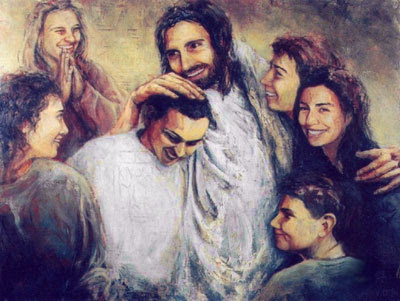
Be shepherds like the Lord
https://blogger.googleusercontent.com/img/b/R29vZ2xl/AVvXsEh_zFQhg3KbRxdFdzEmkBe1sk_aHG4dQ2bJu7Q1rwEchJOSgq-D3v_ICo1esNhbAOd_XXLt_WULRKEoV6O9NvGYLgYYT_kBMZ8TfIZ93Ih8yoS6pu0tOnFH5LrtQw7Vl1M9UIUxGnMwIUA/s400/shepherd_full.jpg
You were made in the image of God. If then you wish to resemble him, follow his example. Since the very name you bear as Christians is a profession of love for men, imitate the love of Christ.
  Reflect for a moment on the wealth of his kindness. Before he came as a man to be among men, he sent John the Baptist to preach repentance and lead men to practise it. John himself was preceded by the prophets, who were to teach the people to repent, to return to God and to amend their lives. Then Christ came himself, and with his own lips cried out: Come to me, all you who labour and are overburdened, and I will give you rest. How did he receive those who listened to his call? He readily forgave them their sins; he freed them instantly from all that troubled them. The Word made them holy; the Spirit set his seal on them. The old Adam was buried in the waters of baptism; the new man was reborn to the vigour of grace.
  What was the result? Those who had been God’s enemies became his friends, those estranged from him became his sons, those who did not know him came to worship and love him.
  Let us then be shepherds like the Lord. We must meditate on the Gospel, and as we see in this mirror the example of zeal and loving kindness, we should become thoroughly schooled in these virtues.
  For there, obscurely, in the form of a parable, we see a shepherd who had a hundred sheep. When one of them was separated from the flock and lost its way, that shepherd did not remain with the sheep who kept together at pasture. No, he went off to look for the stray. He crossed many valleys and thickets, he climbed great and towering mountains, he spent much time and labour in wandering through solitary places until at last he found his sheep.
  When he found it, he did not chastise it; he did not use rough blows to drive it back, but gently placed it on his own shoulders and carried it back to the flock. He took greater joy in this one sheep, lost and found, than in all the others.
  Let us look more closely at the hidden meaning of this parable. The sheep is more than a sheep, the shepherd more than a shepherd. They are examples enshrining holy truths. They teach us that we should not look on men as lost or beyond hope; we should not abandon them when they are in danger or be slow to come to their help. When they turn away from the right path and wander, we must lead them back, and rejoice at their return, welcoming them back into the company of those who lead good and holy lives.

Wednesday, February 20, 2013

Wednesday of the 1st week in Lent

From a demonstration by Aphraates, bishop

Circumcision of the heart
 
Law and covenant have been entirely changed. God changed the first pact with Adam, and gave a new one to Noah. He gave another to Abraham, and changed this to give a new one to Moses. When the covenant with Moses was no longer observed, he gave another pact in this last age, a pact never again to be changed.
  He established a new law for Adam, that he could not eat of the tree of life. He gave to Noah the sign of the rainbow in the clouds. He then gave Abraham, chosen for his faith, the mark and seal of circumcision for his descendants. Moses was given the Passover lamb, the propitiation for the people.
  All these covenants were different from each other. Moreover, the circumcision that is approved by the giver of those covenants is of the kind spoken of by Jeremiah: Circumcise your hearts. If God’s pact with Abraham was firm, so also is this covenant firm and trustworthy, nor can any other law be laid down, whether it originates outside the law or among those subject to the law.
  God gave Moses a law together with his prescriptions and precepts, and when it was no longer kept, he made the law and its precepts of no avail. He promised a new covenant, different from the first, though the giver of both is one and the same. This is the covenant that he promised: All shall know me from the least to the greatest. In this covenant there is no longer any circumcision of the flesh, any seal upon the people.
  We know, dearly beloved, that God established different laws in different generations which were in force as long as it pleased him. Afterward they were made obsolete. In the words of the apostle: In former times the kingdom of God existed in each generation under different signs.
  Moreover, our God is truthful and his commandments are most trustworthy. Every covenant was proved firm and trustworthy in its own time, and those who have been circumcised in heart are brought to life and receive a second circumcision beside the true Jordan, the waters of baptism that bring forgiveness of sins.
  Jesus, son of Nun, renewed the people’s circumcision with a knife of stone when he had crossed the Jordan with the Israelites. Jesus, our Saviour, renews the circumcision of the heart for the nations who have believed in him and are washed by baptism: circumcision by the sword of his word, sharper than any two-edged sword.
  Jesus, son of Nun, led the people across the Jordan into the promised land. Jesus, our Saviour, has promised the land of the living to all who have crossed the true Jordan, and have believed and are circumcised in heart.
  Blessed, then, are those who are circumcised in heart, and have been reborn in water through the second circumcision. They will receive their inheritance with Abraham, the faithful leader and father of all nations, for his faith was credited to him for righteousness.

Tuesday, February 19, 2013

Tuesday of the first week of Lent


From a treatise on the Lord's Prayer by Saint Cyprian, bishop and martyr

He has given us life: he has also taught us how to pray
 
Dear brothers, the commands of the Gospel are nothing else than God’s lessons, the foundations on which to build up hope, the supports for strengthening faith, the food that nourishes the heart. They are the rudder for keeping us on the right course, the protection that keeps our salvation secure. As they instruct the receptive minds of believers on earth, they lead safely to the kingdom of heaven.
  God willed that many things should be said by the prophets, his servants, and listened to by his people. How much greater are the things spoken by the Son. These are now witnessed to by the very Word of God who spoke through the prophets. The Word of God does not now command us to prepare the way for his coming: he comes in person and opens up the way for us and directs us toward it. Before, we wandered in the darkness of death, aimlessly and blindly. Now we are enlightened by the light of grace, and are to keep to the highway of life, with the Lord to precede and direct us.
  The Lord has given us many counsels and commandments to help us toward salvation. He has even given us a pattern of prayer, instructing us on how we are to pray. He has given us life, and with his accustomed generosity, he has also taught us how to pray. He has made it easy for us to be heard as we pray to the Father in the words taught us by the Son.
  He had already foretold that the hour was coming when true worshippers would worship the Father in spirit and in truth. He fulfilled what he had promised before, so that we who have received the spirit and the truth through the holiness he has given us may worship in truth and in the spirit through the prayer he has taught.
  What prayer could be more a prayer in the spirit than the one given us by Christ, by whom the Holy Spirit was sent upon us? What prayer could be more a prayer in the truth than the one spoken by the lips of the Son, who is truth himself? It follows that to pray in any other way than the Son has taught us is not only the result of ignorance but of sin. He himself has commanded it, and has said: You reject the command of God, to set up your own tradition.
  So, my brothers, let us pray as God our master has taught us. To ask the Father in words his Son has given us, to let him hear the prayer of Christ ringing in his ears, is to make our prayer one of friendship, a family prayer. Let the Father recognise the words of his Son. Let the Son who lives in our hearts be also on our lips. We have him as an advocate for sinners before the Father; when we ask forgiveness for our sins, let us use the words given by our advocate. He tells us: Whatever you ask the Father in my name, he will give you. What more effective prayer could we then make in the name of Christ than in the words of his own prayer?

Monday, February 18, 2013

Monday of the 1st week in Lent


From a Sermon by Saint Gregory Nazianzen

Let us show each other God's generosity
 
 
Recognise to whom you owe the fact that you exist, that you breathe, that you understand, that you are wise, and, above all, that you know God and hope for the kingdom of heaven and the vision of glory, now darkly as in a mirror but then with greater fullness and purity. You have been made a son of God, co-heir with Christ. Where did you get all this, and from whom?
  Let me turn to what is of less importance: the visible world around us. What benefactor has enabled you to look out upon the beauty of the sky, the sun in its course, the circle of the moon, the countless number of stars, with the harmony and order that are theirs, like the music of a harp? Who has blessed you with rain, with the art of husbandry, with different kinds of food, with the arts, with houses, with laws, with states, with a life of humanity and culture, with friendship and the easy familiarity of kinship?
  Who has given you dominion over animals, those that are tame and those that provide you with food? Who has made you lord and master of everything on earth? In short, who has endowed you with all that makes man superior to all other living creatures?
  Is it not God who asks you now in your turn to show yourself generous above all other creatures and for the sake of all other creatures? Because we have received from him so many wonderful gifts, will we not be ashamed to refuse him this one thing only, our generosity? Though he is God and Lord he is not afraid to be known as our Father. Shall we for our part repudiate those who are our kith and kin?
  Brethren and friends, let us never allow ourselves to misuse what has been given us by God’s gift. If we do, we shall hear Saint Peter say: Be ashamed of yourselves for holding on to what belongs to someone else. Resolve to imitate God’s justice, and no one will be poor. Let us not labour to heap up and hoard riches while others remain in need. If we do, the prophet Amos will speak out against us with sharp and threatening words: Come now, you that say: When will the new moon be over, so that we may start selling? When will the sabbath be over, so that we may start opening our treasures?
  Let us put into practice the supreme and primary law of God. He sends down rain on just and sinful alike, and causes the sun to rise on all without distinction. To all earth’s creatures he has given the broad earth, the springs, the rivers and the forests. He has given the air to the birds, and the waters to those who live in the water. He has given abundantly to all the basic needs of life, not as a private possession, not restricted by law, not divided by boundaries, but as common to all, amply and in rich measure. His gifts are not deficient in any way, because he wanted to give equality of blessing to equality of worth, and to show the abundance of his generosity.

Sunday, February 17, 2013

First Sunday in Lent


From a commentary on the psalms by Saint Augustine, bishop

In Christ we suffered temptation, and in him we overcame the Devil


Hear, O God, my petition, listen to my prayer. Who is speaking? An individual, it seems. See if it is an individual: I cried out to you from the ends of the earth while my heart was in anguish. Now it is no longer one person; rather, it is one in the sense that Christ is one, and we are all his members. What single individual can cry from the ends of the earth? The one who cries from the ends of the earth is none other than the Son’s inheritance. It was said to him: Ask of me, and I shall give you the nations as your inheritance, and the ends of the earth as your possession. This possession of Christ, this inheritance of Christ, this body of Christ, this one Church of Christ, this unity that we are, cries from the ends of the earth. What does it cry? What I said before: Hear, O God, my petition, listen to my prayer; I cried out to you from the ends of the earth.’ That is, I made this cry to you from the ends of the earth; that is, on all sides.
  Why did I make this cry? While my heart was in anguish. The speaker shows that he is present among all the nations of the earth in a condition, not of exalted glory but of severe trial.
  Our pilgrimage on earth cannot be exempt from trial. We progress by means of trial. No one knows himself except through trial, or receives a crown except after victory, or strives except against an enemy or temptations.
  The one who cries from the ends of the earth is in anguish, but is not left on his own. Christ chose to foreshadow us, who are his body, by means of his body, in which he has died, risen and ascended into heaven, so that the members of his body may hope to follow where their head has gone before.
  He made us one with him when he chose to be tempted by Satan. We have heard in the gospel how the Lord Jesus Christ was tempted by the devil in the wilderness. Certainly Christ was tempted by the devil. In Christ you were tempted, for Christ received his flesh from your nature, but by his own power gained salvation for you; he suffered death in your nature, but by his own power gained glory for you; therefore, he suffered temptation in your nature, but by his own power gained victory for you.
  If in Christ we have been tempted, in him we overcome the devil. Do you think only of Christ’s temptations and fail to think of his victory? See yourself as tempted in him, and see yourself as victorious in him. He could have kept the devil from himself; but if he were not tempted he could not teach you how to triumph over temptation.

Saturday, February 16, 2013

Saturday after Ash Wednesday

From the treatise Against Heresies by Saint Irenaeus, bishop

The friendship of God
 
Our Lord, the Word of God, first drew men to God as servants, but later he freed those made subject to him. He himself testified to this: I do not call you servants any longer, for a servant does not know what his master is doing. Instead I call you friends, since I have made known to you everything that I have learned from my Father. Friendship with God brings the gift of immortality to those who accept it.
  In the beginning God created Adam, not because he needed man, but because he wanted to have someone on whom to bestow his blessings. Not only before Adam but also before all creation, the Word was glorifying the Father in whom he dwelt, and was himself being glorified by the Father. The Word himself said: Father, glorify me with that glory I had with you before the world was.
  Nor did the Lord need our service. He commanded us to follow him, but his was the gift of salvation. To follow the Saviour is to share in salvation; to follow the light is to enjoy the light. Those who are in the light do not illuminate the light but are themselves illuminated and enlightened by the light. They add nothing to the light; rather, they are beneficiaries, for they are enlightened by the light.
  The same is true of service to God: it adds nothing to God, nor does God need the service of man. Rather, he gives life and immortality and eternal glory to those who follow and serve him. He confers a benefit on his servants in return for their service and on his followers in return for their loyalty, but he receives no benefit from them. He is rich, perfect and in need of nothing.
  The reason why God requires service from man is this: because he is good and merciful he desires to confer benefits on those who persevere in his service. In proportion to God’s need of nothing is man’s need for communion with God.
  This is the glory of man: to persevere and remain in the service of God. For this reason the Lord told his disciples: You did not choose me but I chose you. He meant that his disciples did not glorify him by following him, but in following the Son of God they were glorified by him. As he said: I wish that where I am they also may be, that they may see my glory.

Friday, February 15, 2013

Friday after Ash Wednesday

A homily of Pseudo-Chrysostom
 
Prayer is the light of the soul
 
 
The highest good is prayer and conversation with God, because it means that we are in God’s company and in union with him. When light enters our bodily eyes our eyesight is sharpened; when a soul is intent on God, God’s inextinguishable light shines into it and makes it bright and clear. I am talking, of course, of prayer that comes from the heart and not from routine: not the prayer that is assigned to particular days or particular moments in time, but the prayer that happens continuously by day and by night.
  Indeed the soul should not only turn to God at times of explicit prayer. Whatever we are engaged in, whether it is care for the poor, or some other duty, or some act of generosity, we should remember God and long for God. The love of God will be as salt is to food, making our actions into a perfect dish to set before the Lord of all things. Then it is right that we should receive the fruits of our labours, overflowing onto us through all eternity, if we have been offering them to him throughout our lives.
  Prayer is the light of the soul, true knowledge of God, a mediator between God and men. Prayer lifts the soul into the heavens where it hugs God in an indescribable embrace. The soul seeks the milk of God like a baby crying for the breast. It fulfils its own vows and receives in exchange gifts better than anything that can be seen or imagined.
  Prayer is a go-between linking us to God. It gives joy to the soul and calms its emotions. I warn you, though: do not imagine that prayer is simply words. Prayer is the desire for God, an indescribable devotion, not given by man but brought about by God’s grace. As St Paul says: For when we cannot choose words in order to pray properly, the Spirit himself intercedes on our behalf in a way that could never be put into words.
  If God gives to someone the gift of such prayer, it is a gift of imperishable riches, a heavenly food that satisfies the spirit. Whoever tastes that food catches fire and his soul burns for ever with desire for the Lord.
  To begin on this path, start by adorning your house with modesty and humility. Make it shine brightly with the light of justice. Decorate it with the gold leaf of good works, with the jewels of faithfulness and greatness of heart. Finally, to make the house perfect, raise a gable above it all, a gable of prayer. Thus you will have prepared a pure and sparkling house for the Lord. Receive the Lord into this royal and splendid dwelling — in other words: receive, by his grace, his image into the temple of your soul.

Thursday, February 14, 2013

Thursday after Ash Wednesday; commemoration of Saints Cyril, monk, and Methodius, Bishop


From a sermon by Saint Leo the Great, pope

Purification of spirit through fasting and almsgiving
Dear friends, at every moment the earth is full of the mercy of God, and nature itself is a lesson for all the faithful in the worship of God. The heavens, the sea and all that is in them bear witness to the goodness and omnipotence of their Creator, and the marvellous beauty of the elements as they obey him demands from the intelligent creation a fitting expression of its gratitude.
  But with the return of that season marked out in a special way by the mystery of our redemption, and of the days that lead up to the paschal feast, we are summoned more urgently to prepare ourselves by a purification of spirit.
  The special note of the paschal feast is this: the whole Church rejoices in the forgiveness of sins. It rejoices in the forgiveness not only of those who are then reborn in holy baptism but also of those who are already numbered among God’s adopted children.
  Initially, men are made new by the rebirth of baptism. Yet there still is required a daily renewal to repair the shortcomings of our mortal nature, and whatever degree of progress has been made there is no one who should not be more advanced. All must therefore strive to ensure that on the day of redemption no one may be found in the sins of his former life.
  Dear friends, what the Christian should be doing at all times should be done now with greater care and devotion, so that the Lenten fast enjoined by the apostles may be fulfilled, not simply by abstinence from food but above all by the renunciation of sin.
  There is no more profitable practice as a companion to holy and spiritual fasting than that of almsgiving. This embraces under the single name of mercy many excellent works of devotion, so that the good intentions of all the faithful may be of equal value, even where their means are not. The love that we owe both God and man is always free from any obstacle that would prevent us from having a good intention. The angels sang: Glory to God in the highest, and peace to his people on earth. The person who shows love and compassion to those in any kind of affliction is blessed, not only with the virtue of good will but also with the gift of peace.
  The works of mercy are innumerable. Their very variety brings this advantage to those who are true Christians, that in the matter of almsgiving not only the rich and affluent but also those of average means and the poor are able to play their part. Those who are unequal in their capacity to give can be equal in the love within their hearts.

Wednesday, February 13, 2013

First reading for Ash Wednesday

 Real fasting is active...not just giving up a few chocolates or jelly beans. Please read what Isaiah told the people!!!!


Isaiah 58:1-12 ©


Shout for all you are worth,
raise your voice like a trumpet.
Proclaim their faults to my people,
their sins to the House of Jacob.
They seek me day after day,
they long to know my ways,
like a nation that wants to act with integrity
and not ignore the law of its God.
They ask me for laws that are just,
they long for God to draw near:
‘Why should we fast if you never see it,
why do penance if you never notice?’
Look, you do business on your fast-days,
you oppress all your workmen;
look, you quarrel and squabble when you fast
and strike the poor man with your fist.
Fasting like yours today
will never make your voice heard on high.
Is that the sort of fast that pleases me,
a truly penitential day for men?
Hanging your head like a reed,
lying down on sackcloth and ashes?
Is that what you call fasting,
a day acceptable to the Lord?
Is not this the sort of fast that pleases me
– it is the Lord who speaks –
to break unjust fetters and
undo the thongs of the yoke,
to let the oppressed go free,
and break every yoke,
to share your bread with the hungry,
and shelter the homeless poor,
to clothe the man you see to be naked
and not turn from your own kin?
Then will your light shine like the dawn
and your wound be quickly healed over.
Your integrity will go before you
and the glory of the Lord behind you.
Cry, and the Lord will answer;
call, and he will say, ‘I am here.’
If you do away with the yoke,
the clenched fist, the wicked word,
if you give your bread to the hungry,
and relief to the oppressed,
your light will rise in the darkness,
and your shadows become like noon.
The Lord will always guide you,
giving you relief in desert places.
He will give strength to your bones
and you shall be like a watered garden,
like a spring of water
whose waters never run dry.
You will rebuild the ancient ruins,
build up on the old foundations.
You will be called ‘Breach-mender’,
‘Restorer of ruined houses.’

Ash Wednesday


From a letter to the Corinthians by Saint Clement, pope

Repent
Let us fix our attention on the blood of Christ and recognize how precious it is to God his Father, since it was shed for our salvation and brought the grace of repentance to all the world.
  If we review the various ages of history, we will see that in every generation the Lord has offered the opportunity of repentance to any who were willing to turn to him. When Noah preached God’s message of repentance, all who listened to him were saved. Jonah told the Ninevites they were going to be destroyed, but when they repented, their prayers gained God’s forgiveness for their sins, and they were saved, even though they were not of God’s people.
  Under the inspiration of the Holy Spirit, the ministers of God’s grace have spoken of repentance; indeed, the Master of the whole universe himself spoke of repentance with an oath: As I live, says the Lord, I do not wish the death of the sinner but his repentance. He added this evidence of his goodness: House of Israel, repent of your wickedness. Tell the sons of my people: If their sins should reach from earth to heaven, if they are brighter than scarlet and blacker than sackcloth, you need only turn to me with your whole heart and say, “Father,” and I will listen to you as a holy people.
  In other words, God wanted all his beloved ones to have the opportunity to repent and he confirmed this desire by his own almighty will. That is why we should obey his sovereign and glorious will and prayerfully entreat his mercy and kindness. We should be suppliant before him and turn to his compassion, rejecting empty works and quarreling and jealousy which only lead to death.
  Brothers, we should be humble in mind, putting aside all arrogance, pride and foolish anger. Rather, we should act in accordance with the Scriptures, as the Holy Spirit says: The wise man must not glory in his wisdom nor the strong man in his strength nor the rich man in his riches. Rather, let him who glories glory in the Lord by seeking him and doing what is right and just. Recall especially what the Lord Jesus said when he taught gentleness and forbearance. Be merciful, he said, so that you may have mercy shown to you. Forgive, so that you may be forgiven. As you treat others, so you will be treated. As you give, so you will receive. As you judge, so you will be judged. As you are kind to others, so you will be treated kindly. The measure of your giving will be the measure of your receiving.
  Let these commandments and precepts strengthen us to live in humble obedience to his sacred words. As Scripture asks: Whom shall I look upon with favour except the humble, peaceful man who trembles at my words?
  Sharing then in the heritage of so many vast and glorious achievements, let us hasten toward the goal of peace, set before us from the beginning. Let us keep our eyes firmly fixed on the Father and Creator of the whole universe, and hold fast to his splendid and transcendent gifts of peace and all his blessings.

Tuesday, February 12, 2013

Tuesday of the 5th week in ordinary time


Origen's homilies on Genesis


The sacrifice of Abraham
 
 
Abraham took the wood for the burnt offering, loaded it on Isaac, and carried in his own hands the fire and the knife. Then the two of them set out together. Isaac himself carries the wood for his own holocaust: this is a figure of Christ. For Christ carried the burden of the cross himself, and yet to carry the wood for the holocaust is really the duty of the priest. So Christ is then both victim and priest. This is the meaning of the expression: they set out together. For when Abraham, who was to perform the sacrifice, carried the fire and the knife, Isaac did not walk behind him, but with him. In this way he showed that he exercised the priesthood equally with Abraham.
  What happened next? Isaac spoke to his father Abraham, ‘Father’ he said. This plea from the son was at that instant the voice of temptation. For do you not think the voice of the son who was about to be sacrificed struck a responsive chord in the heart of the father? Although Abraham did not waver because of his faith, he responded with a voice full of affection: ‘Yes, my son’ he replied. ‘Look,’ said Isaac, ‘here are the fire and the wood, but where is the lamb for the burnt offering?’ Abraham answered, ‘My son, God himself will provide the lamb for the burnt offering’.
  The careful yet loving response of Abraham moves me greatly. I do not know what he saw in spirit, because he did not speak of the present but of the future: God himself will provide the lamb. His son asks what is to happen now, but Abraham’s reply concerns the future. Indeed the Lord himself provided a lamb, in Christ.
  Abraham stretched out his hand and seized the knife to kill his son. But the angel of the Lord called to him from heaven. ‘Abraham, Abraham’ he said. ‘I am here’ Abraham replied. ‘Do not raise your hand against the boy’ the angel said. ‘Do not harm him, for now I know you fear God’. Compare this to what St Paul says when he speaks of God: He did not spare his own Son but gave him up for us all. God emulates man with magnificent generosity. Abraham offered to God his mortal son who did not die; God gave up his immortal Son who died for all of us.
  Then looking up, Abraham saw a ram caught by its horns in a bush. We said before that Isaac is a type of Christ. Yet this also seems true of the ram. It is worth understanding how both are figures of Christ – Isaac who was not killed and the ram which was. Christ is the Word of God, but the Word became flesh.
  Christ therefore suffered, but in the flesh. Christ, the bodily Christ, endured death; and the ram signifies that body and that death. As John said: Behold the lamb of God, behold him who takes away the sins of the world. The Word, on the other hand, remained incorruptible. This is Christ according to the spirit, and Isaac signifies that spirit. Therefore, Christ himself is both victim and priest according to the spirit. For he offers the victim to the Father according to the flesh, and he is himself offered on the altar of the cross.

Monday, February 11, 2013

Our Lady of Lourdes


From a letter by Saint Marie Bernadette Soubirous, virgin

The lady spoke to me
 
I had gone down one day with two other girls to the bank of the river Gave when suddenly I heard a kind of rustling sound. I turned my head toward the field by the side of the river but the trees seemed quite still and the noise was evidently not from them. Then I looked up and caught sight of the cave where I saw a lady wearing a lovely white dress with a bright belt. On top of each of her feet was a pale yellow rose, the same colour as her rosary beads.
  At this I rubbed my eyes, thinking I was seeing things, and I put my hands into the fold of my dress where my rosary was. I wanted to make the sign of the cross but for the life of me I couldn’t manage it and my hand just fell down. Then the lady made the sign of the cross herself and at the second attempt I managed to do the same, though my hands were trembling. Then I began to say the rosary while the lady let her beads slip through her fingers, without moving her lips. When I stopped saying the Hail Mary, she immediately vanished.
  I asked my two companions if they had noticed anything, but they said no. Of course they wanted to know what I was doing and I told them that I had seen a lady wearing a nice white dress, though I didn’t know who she was. I told them not to say anything about it, and they said I was silly to have anything to do with it. I said they were wrong and I came back next Sunday, feeling myself drawn to the place....
  The third time I went the lady spoke to me and asked me to come every day for fifteen days. I said I would and then she said that she wanted me to tell the priests to build a chapel there. She also told me to drink from the stream. I went to the Gave, the only stream I could see. Then she made me realise she was not speaking of the Gave and she indicated a little trickle of water close by. When I got to it I could only find a few drops, mostly mud. I cupped my hands to catch some liquid without success and then I started to scrape the ground. I managed to find a few drops of water but only at the fourth attempt was there a sufficient amount for any kind of drink. The lady then vanished and I went back home.
  I went back each day for two weeks and each time, except one Monday and one Friday, the lady appeared and told me to look for a stream and wash in it and to see that the priests build a chapel there. I must also pray, she said, for the conversion of sinners. I asked her many times what she meant by that, but she only smiled. Finally with outstretched arms and eyes looking up to heaven she told me she was the Immaculate Conception.
  During the two weeks she told me three secrets but I was not to speak about them to anyone and so far I have not.

Sunday, February 10, 2013

Sunday of the 5th week in Ordinary time


From an explanation of Paul's letter to the Galatians by Saint Augustine, bishop

Let us understand the workings of God's grace
Paul writes to the Galatians to make them understand that by God’s grace they are no longer under the law. When the Gospel was preached to them, there were some among them of Jewish origin known as circumcisers – though they called themselves Christians – who did not grasp the gift they had received. They still wanted to be under the burden of the law. Now God had imposed that burden on those who were slaves to sin and not on servants of justice. That is to say, God had given a just law to unjust men in order to show them their sin, not to take it away. For sin is taken away only by the gift of faith that works through love. The Galatians had already received this gift, but the circumcisers claimed that the Gospel would not save them unless they underwent circumcision and were willing to observe also the other traditional Jewish rites.
  The Galatians, therefore, began to question Paul’s preaching of the Gospel because he did not require Gentiles to follow Jewish observances as other apostles had done. Even Peter had yielded to the scandalised protests of the circumcisers. He pretended to believe that the Gospel would not save the Gentiles unless they fulfilled the burden of the law. But Paul recalled him from such dissimulation, as is shown in this very same letter. A similar issue arises in Paul’s letter to the Romans, but with an evident difference. Through his letter to them, Paul was able to resolve the strife and controversy that had developed between the Jewish and Gentile converts.
  In the present letter Paul is writing to persons who were profoundly influenced and disturbed by the circumcisers. The Galatians had begun to believe them and to think that Paul had not preached rightly, since he had not ordered them to be circumcised. And so the Apostle begins by saying: I am amazed that you are so quickly deserting him who called you to the glory of Christ, and turning to another gospel.
  After this there comes a brief introduction to the point at issue. But remember in the very opening of the letter Paul had said that he was an apostle not from men nor by any man, a statement that does not appear in any other letter of his. He is making it quite clear that the circumcisers, for their part, are not from God but from men, and that his authority in preaching the Gospel must be considered equal to that of the other apostles. For he was called to be an apostle not from men nor by any man, but through God the Father and his Son Jesus Christ.

Saturday, February 9, 2013

Vatican II, 'Gaudium et Spes'

Human activity
 
Just as it proceeds from man, so human activity is ordered toward man. For when a man works, he not only alters things and society, he develops himself as well. He learns much, he cultivates his resources, he goes outside himself and beyond himself. Rightly understood, this kind of growth is of greater value than any external riches which can be obtained. A man is more precious for what he is than for what he has.
  Similarly, all that men do to obtain greater justice, wider brotherhood, a more humane disposition of social relationships has greater worth than technical advances. For these advances can supply the material for human progress, but of themselves alone they can never actually bring it about.
  Hence, the norm of human activity is this: that in accord with the divine plan and will, it harmonize with the genuine good of the human race, and that it allow men as individuals and as members of society to pursue their total vocation and fulfil it.
  However, many of our contemporaries seem to fear that a closer bond between human activity and religion will work against the independence of men, of societies, or of the sciences. If by the autonomy of earthly affairs we mean that created things and societies themselves enjoy their own laws and values which must be gradually deciphered, put to use, and regulated by men, then it is entirely right to demand that autonomy. It is not merely required by modern man, it also harmonises also with the will of the Creator. For by the very circumstance of their having been created, all things are endowed with their own stability, truth, goodness, proper laws and order. Man must respect these as he isolates them by the appropriate methods of the individual sciences or arts.
  Consequently, we can only deplore certain habits of mind, which are sometimes found too among Christians, which do not sufficiently attend to the rightful independence of science and which, from the arguments and controversies they spark, lead many minds to conclude that faith and science are mutually opposed.
  But if the expression “the independence of temporal affairs” is taken to mean that created things do not depend on God, and that man can use them without any reference to their Creator, anyone who acknowledges God will see how false such a meaning is. For without the Creator the creature would disappear.

Friday, February 8, 2013

Saint Josephine Bakhita, Virgin

From a homily by a spiritual writer of the fourth century

May you be filled to the complete fullness of Christ
 
Those who have been found worthy to become children of God and also to be born again through the Holy Spirit, those who carry Christ within them, shining within them and renewing them – these people are guided by the Spirit in various ways and led forward by grace working invisibly in the inner peace of their hearts.
  Sometimes they are, as it were, in mourning and lamentation for the whole human race. They utter prayers for all mankind and fall back in tears and lamentation. They are on fire with spiritual love for all humanity.
  Sometimes they burn, through the Spirit, with such love and exultation that they would embrace all mankind if they could, without discrimination, good and bad alike.
  Sometimes they are cast down by humility, down below the least of men, as they consider themselves to be in the lowest, the most abject of conditions.
  Sometimes the Spirit keeps them in a state of inextinguishable and unspeakable gladness.
  Sometimes they are like some champion who puts on a full suit of royal armour and plunges into battle, combats his enemies fiercely and at length vanquishes them. For in the same way the spiritual champion, wearing the heavenly armour of the Spirit, attacks his enemies and, winning the battle, treads them underfoot.
  Sometimes their soul is in the deepest silence, stillness and peace, experiencing nothing but spiritual delight and ineffable power: the best of all possible states.
  Sometimes their soul is in a state of understanding and boundless wisdom and attention to the inscrutable Spirit, taught by grace things that neither tongue nor lips can describe.
  And sometimes their soul is in a state just like anyone else’s.
  Thus grace is poured into them in different ways, and by different paths it leads the soul, renewing it according to God’s will. It guides it by various paths until it is made whole, sinless and stainless before the heavenly Father.
  Therefore let us pray to God, pray with great love and hope, that he may give us the heavenly grace of the Spirit. Let us pray that the Spirit may guide us and lead us, following God’s will in every way, and may re-make us in stillness and in quiet. Thanks to his guidance and spiritual strengthening, may we be found worthy to attain the perfection and fullness of Christ. As St Paul says: that you may be filled to the complete fullness of Christ.

Thursday, February 7, 2013

Thursday of the 4th week in ordinary time


From the Instructions to Catechumens by St Cyril of Jerusalem

Even in time of persecution let the Cross be your joy
The Catholic Church glories in every deed of Christ. Her supreme glory, however, is the cross. Well aware of this, Paul says: God forbid that I glory in anything but the cross of our Lord Jesus Christ!
  At Siloam, there was a sense of wonder, and rightly so: a man born blind recovered his sight. But of what importance is this, when there are so many blind people in the world? Lazarus rose from the dead, but even this affected only Lazarus: what of those countless numbers who have died because of their sins? Those miraculous loaves fed five thousand people; yet this is a small number compared to those all over the world who were starved by ignorance. After eighteen years a woman was freed from the bondage of Satan; but are we not all shackled by the chains of our own sins?
  For us all, however, the cross is the crown of victory. It has brought light to those blinded by ignorance. It has released those enslaved by sin. Indeed, it has redeemed the whole of mankind!
  Do not, then, be ashamed of the cross of Christ; rather, glory in it. Although it is a stumbling block to the Jews and folly to the Gentiles, the message of the cross is our salvation. Of course it is folly to those who are perishing, but to us who are being saved it is the power of God. For it was not a mere man who died for us, but the Son of God, God made man.
  In the Mosaic law a sacrificial lamb banished the destroyer. But now it is the Lamb of God who takes away the sin of the world. Will he not free us from our sins even more? The blood of an animal, a sheep, brought salvation. Will not the blood of the only-begotten Son bring us greater salvation?
  He was not killed by violence, he was not forced to give up his life: his was a willing sacrifice. Listen to his own words: I have the power to lay down my life and take it up again. Yes, he willingly submitted to his own passion. He took joy in his achievement; in his crown of victory he was glad and in the salvation of man he rejoiced. He did not blush at the cross, for by it he was to save the world. No, it was not a lowly man who suffered, but God incarnate. He entered the contest for the reward he would win by his patient endurance.
  Certainly in times of tranquillity the cross should give you joy. But maintain the same faith in times of persecution. Otherwise you will be a friend of Jesus in times of peace and his enemy during war. Now you receive the forgiveness of your sins and the generous gift of grace from your king. When war comes, fight courageously for him.
  Jesus never sinned; yet he was crucified for you. Will you refuse to be crucified for him, who for your sake was nailed to the cross? You are not the one who gives the favour; you have received one first. For your sake he was crucified on Golgotha. Now you are returning his favour: you are fulfilling your debt to him.