Friday, May 15, 2015

Friday of the 6th week of Eastertide


From a sermon by Saint Leo the Great, pope


Our faith is increased by the Lord's ascension
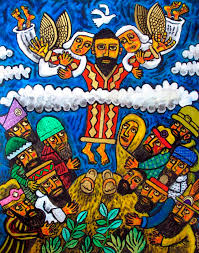
Image result for Our faith is increased by the Lord's ascension

At Easter, beloved brethren, it was the Lord’s resurrection which was the cause of our joy; our present rejoicing is on account of his ascension into heaven. With all due solemnity we are commemorating that day on which our poor human nature was carried up, in Christ, above all the hosts of heaven, above all the ranks of angels, beyond the highest heavenly powers to the very throne of God the Father. It is upon this ordered structure of divine acts that we have been firmly established, so that the grace of God may show itself still more marvellous when, in spite of the withdrawal from men’s sight of everything that is rightly felt to command their reverence, faith does not fail, hope is not shaken, charity does not grow cold.
  For such is the power of great minds, such is the light of truly believing souls, that they put unhesitating faith in what is not seen with the bodily eye; they fix their desires on what is beyond sight. Such fidelity could never be born in our hearts, nor could anyone be justified by faith, if our salvation lay only in what was visible.
  And so our Redeemer’s visible presence has passed into the sacraments. Our faith is nobler and stronger because sight has been replaced by a doctrine whose authority is accepted by believing hearts, enlightened from on high. This faith was increased by the Lord’s ascension and strengthened by the gift of the Spirit; it would remain unshaken by fetters and imprisonment, exile and hunger, fire and ravening beasts, and the most refined tortures ever devised by brutal persecutors. Throughout the world women no less than men, tender girls as well as boys, have given their life’s blood in the struggle for this faith. It is a faith that has driven out devils, healed the sick and raised the dead.
  Even the blessed apostles, though they had been strengthened by so many miracles and instructed by so much teaching, took fright at the cruel suffering of the Lord’s passion and could not accept his resurrection without hesitation. Yet they made such progress through his ascension that they now found joy in what had terrified them before. They were able to fix their minds on Christ’s divinity as he sat at the right hand of his Father, since what was presented to their bodily eyes no longer hindered them from turning all their attention to the realisation that he had not left his Father when he came down to earth, nor had he abandoned his disciples when he ascended into heaven.
  The truth is that the Son of Man was revealed as Son of God in a more perfect and transcendent way once he had entered into his Father’s glory; he now began to be indescribably more present in his divinity to those from whom he was further removed in his humanity. A more mature faith enabled their minds to stretch upward to the Son in his equality with the Father; it no longer needed contact with Christ’s tangible body, in which as man he is inferior to the Father. For while his glorified body retained the same nature, the faith of those who believed in him was now summoned to heights where, as the Father’s equal, the only-begotten Son is reached not by physical handling but by spiritual discernment.


Thursday, May 14, 2015

The Ascension of the Lord

Image result for The Ascension of the Lord


From a sermon by Saint Augustine

No one has ever ascended into heaven except the one who descended from heaven
Today our Lord Jesus Christ ascended into heaven; let our hearts ascend with him. Listen to the words of the Apostle: If you have risen with Christ, set your hearts on the things that are above where Christ is, seated at the right hand of God; seek the things that are above, not the things that are on earth. For just as he remained with us even after his ascension, so we too are already in heaven with him, even though what is promised us has not yet been fulfilled in our bodies.
Image result for The Ascension of the Lord
  Christ is now exalted above the heavens, but he still suffers on earth all the pain that we, the members of his body, have to bear. He showed this when he cried out from above: Saul, Saul, why do you persecute me? and when he said: I was hungry and you gave me food.
  Why do we on earth not strive to find rest with him in heaven even now, through the faith, hope and love that unites us to him? While in heaven he is also with us; and we while on earth are with him. He is here with us by his divinity, his power and his love. We cannot be in heaven, as he is on earth, by divinity, but in him, we can be there by love.
  He did not leave heaven when he came down to us; nor did he withdraw from us when he went up again into heaven. The fact that he was in heaven even while he was on earth is borne out by his own statement: No one has ever ascended into heaven except the one who descended from heaven, the Son of Man, who is in heaven.
Image result for The Ascension of the Lord  These words are explained by our oneness with Christ, for he is our head and we are his body. No one ascended into heaven except Christ because we also are Christ: he is the Son of Man by his union with us, and we by our union with him are the sons of God. So the Apostle says: Just as the human body, which has many members, is a unity, because all the different members make one body, so is it also with Christ. He too has many members, but one body.
  Out of compassion for us he descended from heaven, and although he ascended alone, we also ascend, because we are in him by grace. Thus, no one but Christ descended and no one but Christ ascended; not because there is no distinction between the head and the body, but because the body as a unity cannot be separated from the head.

Wednesday, May 13, 2015

Our Lady of Fátima or Wednesday of the 6th week of Eastertide


A sermon of Pope St Leo the Great

The days between the resurrection and the ascension of the Lord
Image result for road to emmaus breaking bread
Breaking bread on the way to Emmaus


Dearly beloved, those days which intervened between the Lord’s Resurrection and Ascension did not pass by in uneventful leisure, but great mysteries were ratified in them and deep truths were revealed.
  In those days the fear of death was removed with all its terrors, and the immortality not only of the soul but also of the flesh was established. In those days the Holy Ghost is poured upon all the Apostles through the Lord’s breathing upon them, and to the blessed Apostle Peter, set above the rest, the keys of the kingdom are entrusted and the care of the Lord’s flock.
  It was during that time that the Lord joined the two disciples as a companion on the way, and, to sweep away all the clouds of our uncertainty, reproached them for the slowness of their timid and trembling hearts. Their enlightened hearts catch the flame of faith, and lukewarm as they have been, they are made to burn while the Lord unfolds the Scriptures. In the breaking of bread also their eyes are opened as they eat with him. How much more blessed is that opening of their eyes, to the glorification of their nature, than the time when our first parents’ eyes were opened to the disastrous consequences of their transgression.
Image result for our lady of fatima
Our Lady of Fatima
  Dearly beloved, through all this time which elapsed between the Lord’s Resurrection and Ascension, God’s Providence had this in view, to teach his own people and impress upon their eyes and their
hearts that the Lord Jesus Christ had risen, risen as truly as he had been born and had suffered and died.
  Hence the most blessed Apostles and all the disciples, who had been both bewildered at his death on the cross and backward in believing his Resurrection, were so strengthened by the clearness of the truth that when the Lord entered the heights of heaven, not only were they affected with no sadness, but were even filled with great joy.
  Truly it was great and unspeakable, that cause of their joy, when in the sight of the holy multitude the Nature of mankind went up: up above the dignity of all heavenly creatures, to pass above the angels’ ranks and to rise beyond the archangels’ heights, and to have its uplifting limited by no elevation until, received to sit with the Eternal Father, it should be associated on the throne with his glory, to whose Nature it was united in the Son.

Tuesday, May 12, 2015

Saint Pancras, Martyr or Saints Nereus and Achilleus, Martyrs


A sermon of St Bernard
 
I am with him in tribulation
 Image result for saint pancras, martyr
‘I am with him in tribulation,’ says God; and should I meanwhile seek anything other than tribulation? It is good for me to cling to the Lord, and not only to cling, but to put my hope in the Lord my God, since he says: ‘I will rescue him and glorify him.’
  ‘I am with him in tribulation,’ he says, ‘my delight is to be with the sons of men.’ Immanuel, God with us. He came down to be near to those who are troubled in heart, to be with us in our tribulation. There will be a time when we shall be caught up in the clouds to meet Christ in the air, and thus we shall be for ever with the Lord. But we must take care to have him with us in the meantime, so that he who is to give us our homeland may be our companion on our way, or rather that he who will then be our homeland may now be our way.
Image result for Saints Nereus and Achilleus, Martyrs
Saints Nereus and Achilleus, Martyrs
  Lord, it is good for me to suffer, so long as you are with me, better than to reign without you, to feast without you, to boast without you. Lord, it is better for me to embrace you in tribulation, to have you with me in the furnace, than to be without you, even in heaven. What is there for me in heaven, and what have I desired save you on the earth? Gold is tried in the furnace, and just men in the test of tribulation. Lord, there are you, there with them: there you stand in the midst of those who are gathered in your name, as you stood once with the three young men.
  Why are we afraid, why do we delay, why do we flee from this furnace? The fire rages, but the Lord is with us in tribulation. If God is with us, who can be against us? Furthermore, if he rescues us, who can snatch us out of his hand? Who can take us from his grasp? Finally, if he glorifies us, who can make us inglorious? If he glorifies us, who can humiliate us?
  ‘I will satisfy him with length of days.’ It is as if he were saying: I know what he desires, what he thirsts for, what pleases him. He takes no delight in gold or silver, in pleasure, the acquisition of knowledge, or any worldly dignity. He counts all these things as loss, he spurns them and values them as dirt. He has entirely emptied himself, and does not let himself be taken up with things which he knows cannot satisfy him. He knows in whose image he is made, of whose greatness he is capable, and he will not snatch at a small thing which would mean missing the greatest.
  Therefore ‘I will satisfy him with length of days,’ for he can be refreshed only by the true light, and can be filled only by the eternal light. This length has no end, this brightness knows no setting, this is a satisfaction that will never grow wearisome.

Monday, May 11, 2015

Monday of the 6th week of Eastertide


From the treatise On the Trinity by Didymus of Alexandria

The Holy Spirit renews us in baptism
Image result for The Holy Spirit renews us in baptism
The Holy Spirit renews us in baptism through his godhead, which he shares with the Father and the Son. Finding us in a state of deformity, the Spirit restores our original beauty and fills us with his grace, leaving no room for anything unworthy of our love. The Spirit frees us from sin and death, and changes us from the earthly men we were, men of dust and ashes, into spiritual men, sharers in the divine glory, sons and heirs of God the Father who bear a likeness to the Son and are his co-heirs and brothers, destined to reign with him and to share his glory. In place of earth the Spirit reopens heaven to us and gladly admits us into paradise, giving us even now greater honour than the angels, and by the holy waters of baptism extinguishing the unquenchable fires of hell.
  We men are conceived twice: to the human body we owe our first conception, to the divine Spirit, our second. John says: To all who received him, who believed in his name, he gave power to become children of God. These were born not by human generation, not by the desire of the flesh, not by the will of man, but of God. All who believed in Christ, he says, received power to become children of God, that is, of the Holy Spirit, and to gain kinship with God. To show that their parent was God the Holy Spirit, he adds these words of Christ: I give you this solemn warning, that without being born of water and the Spirit, no one can enter the kingdom of God.
  Visibly, through the ministry of priests, the font gives symbolic birth to our visible bodies. Invisibly, through the ministry of angels, the Spirit of God, whom even the mind’s eye cannot see, baptizes into himself both our souls and bodies, giving them a new birth.
  Speaking quite literally, and also in harmony with the words of water and the Spirit, John the Baptist says of Christ: He will baptize you with the Holy Spirit and with fire. Since we are only vessels of clay, we must first be cleansed in water and then hardened by spiritual fire – for God is a consuming fire. We need the Holy Spirit to perfect and renew us, for spiritual fire can cleanse us, and spiritual water can recast us as in a furnace and make us into new men.

Sunday, May 10, 2015

6th Sunday of Eastertide


From the commentary on the second letter to the Corinthians by Saint Cyril of Alexandria, bishop

God has reconciled us to himself through Christ and given us the ministry of reconciliation
Image result for God has reconciled us to himself through Christ and given us the ministry of reconciliation
Those who have a sure hope, guaranteed by the Spirit, that they will rise again lay hold of what lies in the future as though it were already present. They say: “Outward appearances will no longer be our standard in judging other men. Our lives are all controlled by the Spirit now, and are not confined to this physical world that is subject to corruption. The light of the Only-begotten has shone on us, and we have been transformed into the Word, the source of all life. While sin was still our master, the bonds of death had a firm hold on us, but now that the righteousness of Christ has found a place in our hearts we have freed ourselves from our former condition of corruptibility.”
  This means that none of us lives in the flesh any more, at least not in so far as living in the flesh means being subject to the weaknesses of the flesh, which include corruptibility. Once we thought of Christ as being in the flesh, but we do not do so any longer, says Saint Paul. By this he meant that the Word became flesh and dwelt among us; he suffered death in the flesh in order to give all men life. It was in this flesh that we knew him before, but we do so no longer. Even though he remains in the flesh, since he came to life again on the third day and is now with his Father in heaven, we know that he has passed beyond the life of the flesh; for having died once, he will never die again, death has no power over him any more. His death was a death to sin, which he died once for all; his life is life with God.
  Since Christ has in this way become the source of life for us, we who follow in his footsteps must not think of ourselves as living in the flesh any longer, but as having passed beyond it. Saint Paul’s saying is absolutely true that when anyone is in Christ he becomes a completely different person: his old life is over and a new life has begun. We have been justified by our faith in Christ and the power of the curse has been broken. Christ’s coming to life again for our sake has put an end to the sovereignty of death. We have come to know the true God and to worship him in spirit and in truth, through the Son, our mediator, who sends down upon the world the Father’s blessings.
  And so Saint Paul shows deep insight when he says: This is all God’s doing: it is he who has reconciled us to himself through Christ. For the mystery of the incarnation and the renewal it accomplished could not have taken place without the Father’s will. Through Christ we have gained access to the Father, for as Christ himself says, no one comes to the Father except through him. This is all God’s doing, then. It is he who has reconciled us to himself through Christ, and who has given us the ministry of reconciliation.

Saturday, May 9, 2015

Saturday of the 5th week of Eastertide


From a discourse on the psalms by Saint Augustine, Bishop

The Easter alleluia
Image result for alleluia praise the lord
Our thoughts in this present life should turn on the praise of God, because it is in praising God that we shall rejoice for ever in the life to come; and no one can be ready for the next life unless he trains himself for it now. So we praise God during our earthly life, and at the same time we make our petitions to him. Our praise is expressed with joy, our petitions with yearning. We have been promised something we do not yet possess, and because the promise was made by one who keeps his word, we trust him and are glad; but insofar as possession is delayed, we can only long and yearn for it. It is good for us to persevere in longing until we receive what was promised, and yearning is over; then praise alone will remain.
  Because there are these two periods of time – the one that now is, beset with the trials and troubles of this life, and the other yet to come, a life of everlasting serenity and joy – we are given two liturgical seasons, one before Easter and the other after. The season before Easter signifies the troubles in which we live here and now, while the time after Easter which we are celebrating at present signifies the happiness that will be ours in the future. What we commemorate before Easter is what we experience in this life; what we celebrate after Easter points to something we do not yet possess. This is why we keep the first season with fasting and prayer; but now the fast is over and we devote the present season to praise. Such is the meaning of the Alleluia we sing.
  Both these periods are represented and demonstrated for us in Christ our head. The Lord’s passion depicts for us our present life of trial – shows how we must suffer and be afflicted and finally die. The Lord’s resurrection and glorification show us the life that will be given to us in the future.
  Now therefore, brethren, we urge you to praise God. That is what we are all telling each other when we say Alleluia. You say to your neighbor, “Praise the Lord!” and he says the same to you. We are all urging one another to praise the Lord, and all thereby doing what each of us urges the other to do. But see that your praise comes from your whole being; in other words, see that you praise God not with your lips and voices alone, but with your minds, your lives and all your actions.
  We are praising God now, assembled as we are here in church; but when we go on our various ways again, it seems as if we cease to praise God. But provided we do not cease to live a good life, we shall always be praising God. You cease to praise God only when you swerve from justice and from what is pleasing to God. If you never turn aside from the good life, your tongue may be silent but your actions will cry aloud, and God will perceive your intentions; for as our ears hear each other’s voices, so do God’s ears hear our thoughts.

Friday, May 8, 2015

Friday of the 5th week of Eastertide


From a sermon by Blessed Isaac of Stella, abbot

Firstborn of many brothers
Image result for Abba, Father
 
Just as the head and body of a man form one single man, so the Son of the Virgin and those he has chosen to be his members form a single man and the one Son of Man. Christ is whole and entire, head and body, say the Scriptures, since all the members form one body, which with its head is one Son of Man, and he with the Son of God is one Son of God, who himself with God is one God. Therefore the whole body with its head is Son of Man, Son of God, and God. This is the explanation of the Lord’s words: Father, I desire that as you and I are one, so they may be one with us.
  And so, according to this well-known reading of Scripture, neither the body without the head, nor the head without the body, nor the head and body without God make the whole Christ. When all are united with God they become one God. The Son of God is one with God by nature; the Son of Man is one with him in his person; we, his body, are one with him sacramentaly. Consequently those who by faith are spiritual members of Christ can truly say that they are what he is: the Son of God and God himself. But what Christ is by his nature we are as his partners; what he is of himself in all fullness, we are as participants. Finally, what the Son of God is by generation, his members are by adoption, according to the text: As sons you have received the Spirit of adoption, enabling you to cry, Abba, Father.
  Through his Spirit, he gave men the power to become sons of God, so that all those he has chosen might be taught by the firstborn among many brothers to say: Our Father, who are in heaven. Again he says elsewhere: I ascend to my Father and to your Father.
We are spiritual Semites
  By the Spirit, from the womb of the Virgin, was born our head, the Son of Man; and by the same Spirit, in the waters of baptism, we are reborn as his body and as sons of God. And just as he was born without any sin, so we are reborn in the forgiveness of all our sins. As on the cross he bore the sum total of the whole body’s sins in his own physical body, so he gave his members the grace of rebirth in order that no sin might be imputed to his mystical body. It is written: Blessed is the man to whom the Lord imputes no guilt for his sin. The ‘blessed man’ of this text is undoubtedly Christ. Insofar as God is his head, Christ forgives sins. Insofar as the head of the body is one man, there is no sin to forgive; and insofar as the body that belongs to this head consists of many members, there is sin indeed, but it is forgiven and no guilt is imputed.
  In himself he is just: it is he who justifies himself. He alone is both Saviour and saved. In his own body on the cross he bore what he had washed from his body by the waters of baptism. Bringing salvation through wood and through water, he is the Lamb of God who takes away the sins of the world which he took upon himself. Himself a priest, he offers himself as sacrifice to God, and he himself is God. Thus, through his own self, the Son is reconciled to himself as God, as well as to the Father and to the Holy Spirit.

Thursday, May 7, 2015

Thursday of the 5th week of Eastertide


From a treatise by Saint Gaudentius of Brescia, bishop

The Eucharist is The Lord's passover
Image result for The Eucharist is The Lord's passover
 
One man has died for all, and now in every church in the mystery of bread and wine he heals those for whom he is offered in sacrifice, giving life to those who believe and holiness to those who consecrate the offering. This is the flesh of the Lamb; this is his blood. The bread that came down from heaven declared: The bread that I will give is my flesh for the life of the world. It is significant, too, that his blood should be given to us in the form of wine, for his own words in the gospel, I am the true vine, imply clearly enough that whenever wine is offered as a representation of Christ’s passion, it is offered as his blood. This means that it was of Christ that the blessed patriarch Jacob prophesied when he said: He will wash his tunic in wine and his cloak in the blood of the grape. The tunic was our flesh, which Christ was to put on like a garment and which he was to wash in his own blood.
  Creator and Lord of all things, whatever their nature, he brought forth bread from the earth and changed it into his own body. Not only had he the power to do this, but he had promised it; and, as he had changed water into wine, he also changed wine into his own blood. It is the Lord’s passover, Scripture tells us, that is, the Lord’s passing. We are no longer to look upon the bread and wine as earthly substances. They have become heavenly, because Christ has passed into them and changed them into his body and blood. What you receive is the body of him who is the heavenly bread, and the blood of him who is the sacred vine; for when he offered his disciples the consecrated bread and wine, he said: This is my body, this is my blood. We have put our trust in him. I urge you to have faith in him; truth can never deceive.
  When Christ told the crowds that they must eat his flesh and drink his blood, they were horrified and began to murmur among themselves: This teaching is too hard; who can be expected to listen to it? As I have already told you, thoughts such as these must be banished. The Lord himself used heavenly fire to drive them away by going on to declare: It is the spirit that gives life; the flesh is of no avail. The words that I have spoken to you are spirit and life.

Wednesday, May 6, 2015

Wednesday of the 5th week of Eastertide


 Image result for I am the vine, you are the branches


From a commentary on the gospel of John by Saint Cyril of Alexandria, bishop

I am the vine, you are the branches
The Lord calls himself the vine and those united to him branches in order to teach us how much we shall benefit from our union with him, and how important it is for us to remain in his love. By receiving the Holy Spirit, who is the bond of union between us and Christ our Saviour, those who are joined to him, as branches are to a vine, share in his own nature.
  On the part of those who come to the vine, their union with him depends upon a deliberate act of the will; on his part, the union is effected by grace. Because we had good will, we made the act of faith that brought us to Christ, and received from him the dignity of adoptive sonship that made us his own kinsmen, according to the words of Saint Paul: He who is joined to the Lord is one spirit with him.
  The prophet Isaiah calls Christ the foundation, because it is upon him that we as living and spiritual stones are built into a holy priesthood to be a dwelling place for God in the Spirit. Upon no other foundation than Christ can this temple be built. Here Christ is teaching the same truth by calling himself the vine, since the vine is the parent of its branches, and provides their nourishment.
  From Christ and in Christ, we have been reborn through the Spirit in order to bear the fruit of life; not the fruit of our old, sinful life but the fruit of a new life founded upon our faith in him and our love for him. Like branches growing from a vine, we now draw our life from Christ, and we cling to his holy commandment in order to preserve this life. Eager to safeguard the blessing of our noble birth, we are careful not to grieve the Holy Spirit who dwells in us, and who makes us aware of God’s presence in us.
Image result for I am the vine, you are the branches
  Let the wisdom of John teach us how we live in Christ and Christ lives in us: The proof that we are living in him and he is living in us is that he has given us a share in his Spirit. Just as the trunk of the vine gives its own natural properties to each of its branches, so, by bestowing on them the Holy Spirit, the Word of God, the only-begotten Son of the Father, gives Christians a certain kinship with himself and with God the Father because they have been united to him by faith and determination to do his will in all things. He helps them to grow in love and reverence for God, and teaches them to discern right from wrong and to act with integrity.

Tuesday, May 5, 2015

Tuesday of the 5th week of Eastertide


From a commentary on the gospel of John by Saint Cyril of Alexandria, bishop

I am the vine, you are the branches
 
The Lord calls himself the vine and those united to him branches in order to teach us how much we shall benefit from our union with him, and how important it is for us to remain in his love. By receiving the Holy Spirit, who is the bond of union between us and Christ our Saviour, those who are joined to him, as branches are to a vine, share in his own nature.
  On the part of those who come to the vine, their union with him depends upon a deliberate act of the will; on his part, the union is effected by grace. Because we had good will, we made the act of faith that brought us to Christ, and received from him the dignity of adoptive sonship that made us his own kinsmen, according to the words of Saint Paul: He who is joined to the Lord is one spirit with him.
Image result for I am the vine, you are the branchesThe prophet Isaiah calls Christ the foundation, because it is upon him that we as living and spiritual stones are built into a holy priesthood to be a dwelling place for God in the Spirit. Upon no other foundation than Christ can this temple be built. Here Christ is teaching the same truth by calling himself 
 the vine, since the vine is the parent of its branches, and provides their nourishment.
  From Christ and in Christ, we have been reborn through the Spirit in order to bear the fruit of life; not the fruit of our old, sinful life but the fruit of a new life founded upon our faith in him and our love for him. Like branches growing from a vine, we now draw our life from Christ, and we cling to his holy commandment in order to preserve this life. Eager to safeguard the blessing of our noble birth, we are careful not to grieve the Holy Spirit who dwells in us, and who makes us aware of God’s presence in us.
  Let the wisdom of John teach us how we live in Christ and Christ lives in us: The proof that we are living in him and he is living in us is that he has given us a share in his Spirit. Just as the trunk of the vine gives its own natural properties to each of its branches, so, by bestowing on them the Holy Spirit, the Word of God, the only-begotten Son of the Father, gives Christians a certain kinship with himself and with God the Father because they have been united to him by faith and determination to do his will in all things. He helps them to grow in love and reverence for God, and teaches them to discern right from wrong and to act with integrity.

Monday, May 4, 2015

Monday of the 5th week of Eastertide


From a sermon by Saint Gregory of Nyssa, bishop

The firstborn of the new creation
 Image result for The firstborn of the new creation
The reign of life has begun, the tyranny of death is ended. A new birth has taken place, a new life has come, a new order of existence has appeared, our very nature has been transformed! This birth is not brought about by human generation, by the will of man, or by the desire of the flesh, but by God.
  If you wonder how, I will explain in clear language. Faith is the womb that conceives this new life, baptism the rebirth by which it is brought forth into the light of day. The Church is its nurse; her teachings are its milk, the bread from heaven is its food. It is brought to maturity by the practice of virtue; it is wedded to wisdom; it gives birth to hope. Its home is the kingdom; its rich inheritance the joys of paradise; its end, not death, but the blessed and everlasting life prepared for those who are worthy.
  This is the day the Lord has made – a day far different from those made when the world was first created and which are measured by the passage of time. This is the beginning of a new creation. On this day, as the prophet says, God makes a new heaven and a new earth. What is this new heaven? you may ask. It is the firmament of our faith in Christ. What is the new earth? A good heart, a heart like the earth, which drinks up the rain that falls on it and yields a rich harvest.
  In this new creation, purity of life is the sun, the virtues are the stars, transparent goodness is the air, and the depths of the riches of wisdom and knowledge, the sea. Sound doctrine, the divine teachings are the grass and plants that feed God’s flock, the people whom he shepherds; the keeping of the commandments is the fruit borne by the trees.
  On this day is created the true man, the man made in the image and likeness of God. For this day the Lord has made is the beginning of this new world. Of this day the prophet says that it is not like other days, nor is this night like other nights. But still we have not spoken of the greatest gift it has brought us. This day destroyed the pangs of death and brought to birth the firstborn of the dead.
  I ascend to my Father and to your Father, to my God and to your God. O what wonderful good news! He who for our sake became like us in order to make us his brothers, now presents to his true Father his own humanity in order to draw all his kindred up after him

Sunday, May 3, 2015

5th Sunday of Eastertide


From a sermon by Saint Maximus of Turin, bishop

Christ is the day

Image result for Rejoice and be glad, he cries, on this day which the Lord has made.
Christ is risen! He has burst open the gates of hell and let the dead go free; he has renewed the earth through the members of his Church now born again in baptism, and has made it blossom afresh with men brought back to life. His Holy Spirit has unlocked the doors of heaven, which stand wide open to receive those who rise up from the earth. Because of Christ’s resurrection the thief ascends to paradise, the bodies of the blessed enter the holy city, and the dead are restored to the company of the living. There is an upward movement in the whole of creation, each element raising itself to something higher. We see hell restoring its victims to the upper regions, earth sending its buried dead to heaven, and heaven presenting the new arrivals to the Lord. In one and the same movement, our Saviour’s passion raises men from the depths, lifts them up from the earth, and sets them in the heights.
  Christ is risen. His rising brings life to the dead, forgiveness to sinners, and glory to the saints. And so David the prophet summons all creation to join in celebrating the Easter festival: Rejoice and be glad, he cries, on this day which the Lord has made.
  The light of Christ is an endless day that knows no night. Christ is this day, says the Apostle; such is the meaning of his words: Night is almost over; day is at hand. He tells us that night is almost over, not that it is about to fall. By this we are meant to understand that the coming of Christ’s light puts Satan’s darkness to flight, leaving no place for any shadow of sin. His everlasting radiance dispels the dark clouds of the past and checks the hidden growth of vice. The Son is that day to whom the day, which is the Father, communicates the mystery of his divinity. He is the day who says through the mouth of Solomon: I have caused an unfailing light to rise in heaven. And as in heaven no night can follow day, so no sin can overshadow the justice of Christ. The celestial day is perpetually bright and shining with brilliant light; clouds can never darken its skies. In the same way, the light of Christ is eternally glowing with luminous radiance and can never be extinguished by the darkness of sin. This is why John the evangelist says: The light shines in the darkness, and the darkness has never been able to overpower it.
  And so, my brothers, each of us ought surely to rejoice on this holy day. Let no one, conscious of his sinfulness, withdraw from our common celebration, nor let anyone be kept away from our public prayer by the burden of his guilt. Sinner he may indeed be, but he must not despair of pardon on this day which is so highly privileged; for if a thief could receive the grace of paradise, how could a Christian be refused forgiveness?

Saturday, May 2, 2015

Saint Athanasius, Bishop, Doctor


From a discourse by Saint Athanasius, bishop

On the incarnation of the Word
The Word of God, incorporeal, incorruptible and immaterial, entered our world. Yet it was not as if he had been remote from it up to that time. For there is no part of the world that was ever without his presence; together with his Father, he continually filled all things and places.
  Out of his loving-kindness for us he came to us, and we see this in the way he revealed himself openly to us. Taking pity on mankind’s weakness, and moved by our corruption, he could not stand aside and see death have the mastery over us; he did not want creation to perish and his Father’s work in fashioning man to be in vain. He therefore took to himself a body, no different from our own, for he did not wish simply to be in a body or only to be seen.
  If he had wanted simply to be seen, he could indeed have taken another, and nobler, body. Instead, he took our body in its reality.
  Within the Virgin he built himself a temple, that is, a body; he made it his own instrument in which to dwell and to reveal himself. In this way he received from mankind a body like our own, and, since all were subject to the corruption of death, he delivered this body over to death for all, and with supreme love offered it to the Father. He did so to destroy the law of corruption passed against all men, since all died in him. The law, which had spent its force on the body of the Lord, could no longer have any power over his fellowmen. Moreover, this was the way in which the Word was to restore mankind to immortality, after it had fallen into corruption, and summon it back from death to life. He utterly destroyed the power death had against mankind – as fire consumes chaff – by means of the body he had taken and the grace of the resurrection.
  This is the reason why the Word assumed a body that could die, so that this body, sharing in the Word who is above all, might satisfy death’s requirement in place of all. Because of the Word dwelling in that body, it would remain incorruptible, and all would be freed for ever from corruption by the grace of the resurrection.
  In death the Word made a spotless sacrifice and oblation of the body he had taken. By dying for others, he immediately banished death for all mankind.
  In this way the Word of God, who is above all, dedicated and offered his temple, the instrument that was his body, for us all, as he said, and so paid by his own death the debt that was owed. The immortal Son of God, united with all men by likeness of nature, thus fulfilled all justice in restoring mankind to immortality by the promise of the resurrection.
  The corruption of death no longer holds any power over mankind, thanks to the Word, who has come to dwell among them through his one body.

Friday, May 1, 2015

Saint Joseph the Worker


Saint Joseph the Worker


From the pastoral constitution on the Church in the modern world of the Second Vatican Council
The worldwide activity of man
By his labour and abilities man has always striven to improve the quality of his life. Today, particularly by means of science and technology, he has extended his mastery over almost the whole of nature, and still continues to extend it. Through the development of the many means of communication among nations, the human family is coming to see itself, and establish itself, as a single worldwide community. As a result, where formerly man looked especially to supernatural forces for blessings, he now secures many of these benefits for himself, thanks to his own efforts.
  In the face of this vast enterprise now engaging the whole human race, men are asking themselves a series of questions. What is the meaning and value of all this activity? How should these benefits be used? Where are the efforts of individuals and communities finally leading us?
  The Church is the guardian of the deposit of God’s word, from which are drawn the principles of the religious and moral order. Without always having a ready answer to every question, the Church desires to integrate the light of revelation with the skilled knowledge of mankind, so that it may shine on the path which humanity has lately entered.
  Those who believe in God take it for granted that, taken by itself, man’s activity, both individual and collective – that great struggle in which men in the course of the ages have sought to improve the conditions of human living – is in keeping with God’s purpose.
  Man, created in God’s image, has been commissioned to master the earth and all it contains, and so rule the world in justice and holiness. He is to acknowledge God as the creator of all, and to see himself and the whole universe in relation to God, in order that all things may be subject to man, and God’s name be an object of wonder and praise over all the earth.
  This commission extends to even the most ordinary activities of everyday life. Where men and women, in the course of gaining a livelihood for themselves and their families, offer appropriate service to society, they can be confident that their personal efforts promote the work of the Creator, confer benefit on their fellowmen, and help to realise God’s plan in history.
  So far from thinking that the achievements gained by man’s abilities and strength are in opposition to God’s power, or that man with his intelligence is in some sense a rival to his Creator, Christians are, on the contrary, convinced that the triumphs of the human race are a sign of God’s greatness and the effect of his wonderful providence.
  The more the power of men increases, the wider is the scope of their responsibilities, as individuals and as communities.
  It is clear, then, that the Christian message does not deflect men from the building up of the world, or encourage them to neglect the good of their fellowmen, but rather places on them a stricter obligation to work for these objectives.